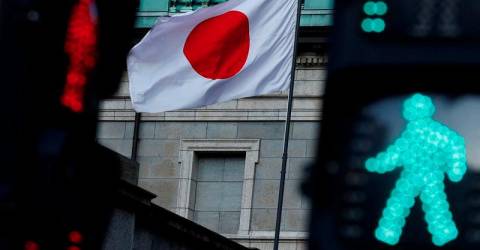
Tokyo: The Bank of Japan raised interest rates on Friday to its highest level since the 2008 global financial crisis, boosting its confidence that rising wages will keep inflation steady around its 2% target.
The decision marks the first increase in rates since July last year and comes days after the inauguration of US President Donald Trump, who is likely to keep policymakers cautious ahead of the potential consequences of higher tariffs.
At its two-day meeting that ended on Friday, the BOJ raised its short-term policy rate to 0.5% from 0.25% – a level Japan has not seen in 17 years. It was made by an 8–1 vote with board member Toyoaki Nakamura dissenting.
The move underscores the central bank’s resolve to consistently raise interest rates to 1% — a level that analysts see as neither cooling nor warming Japan’s economy.
Also read: Japan government will approve $140 billion stimulus
“The chances of achieving the BOJ’s vision are increasing,” the central bank said in a statement announcing the decision, adding that many companies have said they will continue to raise wages at this year’s annual wage talks.
“Underlying inflation is moving toward the BOJ’s 2% target,” the central bank said, adding that financial markets remained stable overall.
The BOJ made no changes to its guidance on future policy and said it would continue to raise interest rates if its economic and price forecasts are realized.
“Their argument remains the same. They are still far from neutral, so it is natural to make adjustments. “It’s not necessarily tightening, but kind of less relaxed,” said Naka Matsuzawa, chief macro strategist at Nomura Securities.
“Unless the BOJ changes the logic of raising rates, or even raises the neutral point they are considering – around 1% – the market will continue to be bullish in future prices and There is not much scope for increase.”
Also read: Japan’s yen hits 34-year low after BOJ keeps interest rates on hold
The dollar fell 0.35% against the yen to 155.51 after the decision, while two-year Japanese government bond (JGB) yields rose to 0.705%, the highest since October 2008.
Attention now focuses on any clues from BOJ Governor Kazuo Ueda on the pace and timing of further hikes in his post-meeting briefing at 0630 GMT.
In a quarterly outlook report, the board raised its price forecast on growing prospects that rising wage gains will keep Japan on track to consistently meet the central bank’s inflation target.
The Board now estimates that core consumer inflation will reach 2.4% in fiscal 2025, slowing to 2.0% in 2026. In its previous estimate in October, it expected inflation to reach 1.9% in both fiscal years 2025 and 2026.
It made no changes to its forecasts that Japan’s economy will grow 1.1% in fiscal 2025 and 1.0% in 2026.
Also read: Japan’s economy declined by 0.5% more than expected
Japan’s core consumer inflation rose to the fastest annual pace in 16 months in December, data showed on Friday, as rising fuel and food prices are pushing up the cost of living for families.
After taking power in April 2023, Ueda scrapped his predecessor’s radical stimulus program in March last year, and raised short-term interest rates to 0.25% in July.
BOJ policymakers have repeatedly said the central bank will keep raising rates if Japan makes progress in achieving a cycle in which rising inflation pushes up wages and boosts consumption — allowing companies to continue raising costs. Is available.