

UK comedian and TV host Jimmy Carr suggested that the British state should consider mining Bitcoin using electricity that would otherwise go unused overnight, with the idea framed as part of a broader effort to call for more “radical” thinking about public finance.
Will the UK mine Bitcoin with excess energy?
Carr made the comments in a Triggerometry interview recorded on “Budget Day” on 11 December, where he questioned why the UK never created a sovereign wealth fund and argued that some revenue-generating assets should be treated as collectively owned.
There are some things that should belong to everyone,” he said, pointing to “oil and gas that belongs to the UK” and “wind farms around the coast.” Carr claimed that “all that money goes to the Crown,” and asked why it should not be passed directly to the public.
He extended this argument to infrastructure such as “mobile phone masts”, while emphasizing that he was not making any socialist case. “I’m not a socialist. I’m not even in favor of state capitalism,” Carr said, before arguing that some assets “should belong to everyone.”
From there, Carr offered Bitcoin mining as a concrete example of a non-tax revenue lever that the government could explore. “I wouldn’t mind if our government said, yes, we’re going to mine for Bitcoin,” he said. “Our power stations, they don’t do anything at night, so we’re going to mine for Bitcoin.” He added: “Great. The new gold standard. Great.”
Jimmy Carr is the most popular comedian and celebrity from the United Kingdom. Carr says, “I wouldn’t mind if our government did mining for Bitcoin. Our power stations don’t do anything at night, so we’re going to do mining for Bitcoin. Great. The new gold standard. Great.” pic.twitter.com/GZRvQT8mua
– Documentation of ₿itcoin 📄 (@DocumentingBTC) 17 December 2025
Carr did not propose a formal policy design, cite data on excess capacity, or address governance questions around state-run mining. The issue, as he presented it, was directional: use underutilized national infrastructure more aggressively and stop treating taxation as the default answer to financing pressures. “Do something original, something interesting with the country’s finances,” Carr said. “Why does it all have to come from taxation?”
Although the comments come from an entertainer rather than a policymaker, this framing is notable for how it positions Bitcoin in the nation-state register: not just as a tradable asset, but as something that a government can produce using excess energy capacity, then hold as an alternative form of reserve value.
Carr’s “mine with surplus electricity” idea has real-world analogies: Bhutan has quietly built a state-linked Bitcoin mining operation largely powered by hydropower, a model often described as a way to monetize seasonal surplus production.
El Salvador has also leaned into the “excess energy” narrative. The country mined approximately 474 BTC in about three years using 1.5 megawatts of geothermal energy from a state-owned plant connected to the Tekapa volcano. And in places like Iceland, miners have long been attracted by abundant renewable supplies (and the economics of cheap, clean electricity), making it one of the most mining-intensive jurisdictions globally.
At press time, BTC traded at $87,113.
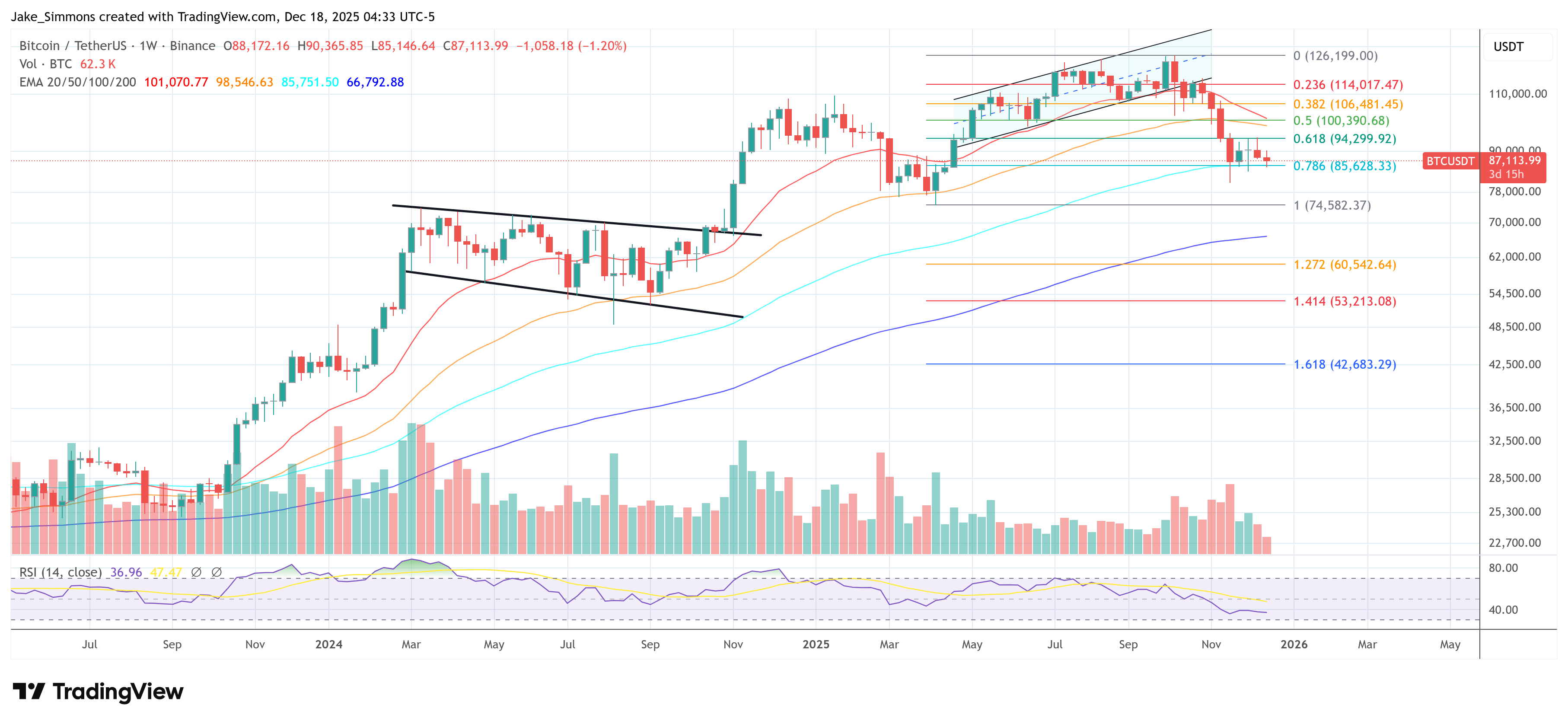
Featured image created with DALL.E, chart from tradingview.com
editorial process Focused on delivering thoroughly researched, accurate and unbiased content for Bitcoinists. We adhere to strict sourcing standards, and each page undergoes diligent review by our team of top technology experts and experienced editors. This process ensures the integrity, relevance and value of our content to our readers.


