The skeleton of St Francis of Assisi has been put on display for the first time, drawing pilgrims to the basilica until March 22 to mark the 800th anniversary.
Assisi: Long queues of thousands of pilgrims formed outside St. Francis Basilica on Sunday. His skeletal remains were publicly displayed for the first time to mark the 800th anniversary of his death.
Families, couples and elderly visitors waited under a large pavilion to see the 13th-century saint. Groups of 750 people were allowed entry every half hour through security checks starting at 7:00 am.
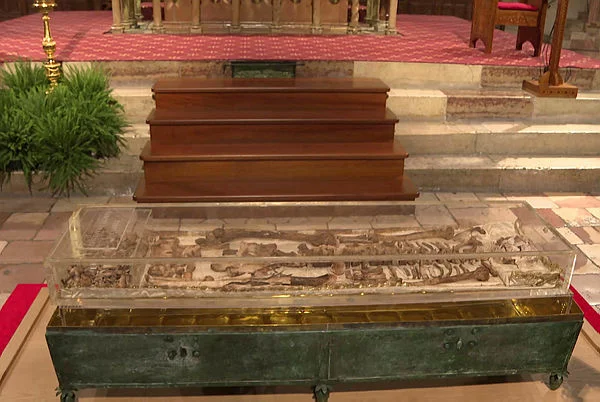
The Franciscan Order reported about 400,000 reserved visits for the demonstration, which will continue until March 22. The remains are kept in a plexiglass case near the altar in the lower church.
Visitor Nicoletta Benoli, 65, said, “It was a very touching morning – a unique event and I appreciated it very much.” She had come from Verona to witness this historic occasion.
Pilgrims are allowed to touch the outer glass case of the relic. Many made the sign of the cross or prayed on their knees as they looked at the bones laid out on a white silk sheet.
“Sometimes we have doubts but here, in these moments, the truth is right in front of us,” Benoli said. He described the proximity as making the saint’s legacy “very real”.
This is only the second public display of the bones, after a one-day viewing for a limited audience in 1978. Previous excavations were only for observation and scientific testing.
“Being close to such models of sainthood communicates something to the soul,” said pilgrim Nicola Urlandini, 35. He felt that the quick passing by the remains was a “very intense” experience.
Communications director Giulio Cesario noted the apparently incinerated state of the skeleton. The Franciscan friar said, “These relics are indeed consumed but not because of time but because of fatigue and privations.”
The skull was damaged when the body was originally moved to the basilica in the 13th century. St. Francis founded his order after renouncing wealth to live a life of poverty.
Franciscan nun Rosa Padhilete described feeling “immense, indescribable happiness”. He traveled from Naples for the event, which he said gave him renewed hope for life.