

Canary Capital CEO Steven McClurg says the investor mix seen in the
“Typically when you launch a new ETF that hasn’t been in the market before, retail adoption is usually the first to happen. So we’ve seen a lot of impact from the retail audience in the first week or two. And then we started getting calls from pension funds and insurance companies globally,” McClurg revealed.
He added: “And that’s the other market segment that we market to in Canary. But we’re seeing a lot of interest there.
Why are XRP ETFs so successful?
McClurg made the comments in a Wealthy Podcast interview with Coinfund President Chris Perkins, discussing Canary’s strategy in crypto ETFs and why single-asset products like XRP could draw demand from both the US and international channels. This throughline was familiar to those who have watched ETFs reshape other markets: Access and execution matter, and they often matter more than ideology.
“A lot of our customers are retail,” McClurg said, estimating based on visible brokerage activity that “probably 20 to 30%” of flows are coming from retail channels. He said the bulk is currently coming from bullish business-oriented capital. “It’s probably about 70% – I don’t want to call it institutional, but it’s probably 70% of fast money at the moment.”
Still, McClurg is of the view that XRP is the stable end state advisor and allocator channel for products like ETFs that already reside inside the ETF ecosystem. “ETFs will probably be used primarily by financial advisors,” he said. “Because they’re simple, they’re clean, they can account for it, they can explain it.”
For crypto, he argued, the problem is not subtle. “Most retail are trading crypto on an exchange and they are being charged huge fees,” he said. “We’re talking $100 per trade. Plus the spread.”
His point was not that ETFs are free, but rather that ETF overlays can reduce costs and friction, especially for investors who don’t want to work in exchange-native workflows. “When you think about ETFs… you’ve already won by buying the ETF, when you’re talking about penny spreads… and then you’re only paying a 1% management fee,” he said.
McClurg also addressed the factor that drives ETF flows into crypto regardless of basis. He argued that spot/futures spreads can act as a lever for ETF demand, and can act as a source of incremental spot pressure when trading becomes attractive.
“Basis trading is really what is driving crypto ETFs at the moment,” he said, adding that outflows in Bitcoin spot ETFs have, sometimes, coincided with the collapse of that spread. For XRP specifically, he suggested that momentum has been supportive since launch.
“We benefited from launching XRP,” he said, “because there is a lot of good base trading there.” He further said, claiming that the product has seen consistent net buying despite softness in broader markets.
McClurg also highlighted the success of all spot XRP ETFs in the US. “Since launch, even in a declining market, there has not been a single day of outflows,” McClurg said.
At press time, XRP was trading at $1.92.
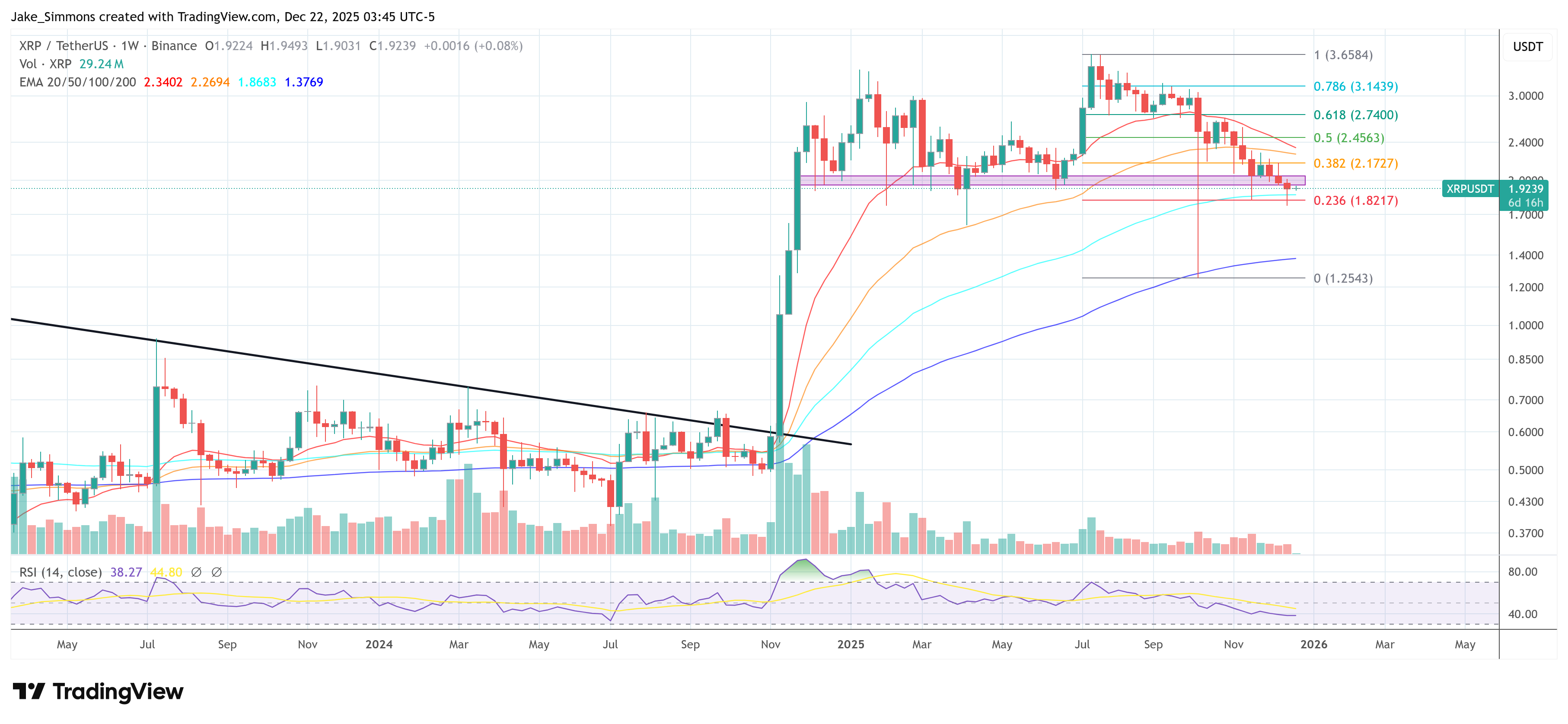
Featured image created with DALL.E, chart from tradingview.com
editorial process Focused on delivering thoroughly researched, accurate and unbiased content for Bitcoinists. We adhere to strict sourcing standards, and each page undergoes diligent review by our team of top technology experts and experienced editors. This process ensures the integrity, relevance and value of our content to our readers.


