Update June 23, 10:01 am EDT (1401 UTC): SpaceX confirms deployment of Starfall capsule.
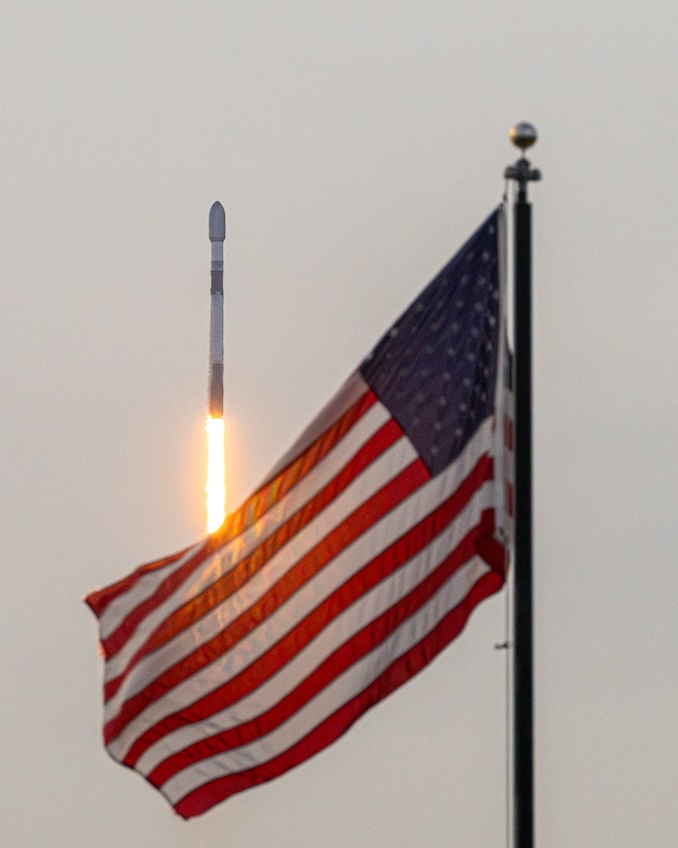
As the sun rose over Florida’s Space Coast on Tuesday, SpaceX’s Falcon 9 rocket was showcasing its new uncrewed reentry capsule, named ‘Starfall’.
The company had remained tight-lipped about the payload and its mission profile, cutting its public-facing, post-liftoff timeline after the booster landing event. SpaceX decided not to share views of its upper stage or starfall payload during its broadcast.
SpaceX has also not disclosed how many spacecraft are on this mission. An environmental assessment (EA) published by the Federal Aviation Administration in May stated that the company wanted to “perform two Starfall reentries to demonstrate capabilities for future transportation and delivery of cargo through space”, but it is unclear whether this mission would involve more than one Starfall capsule.
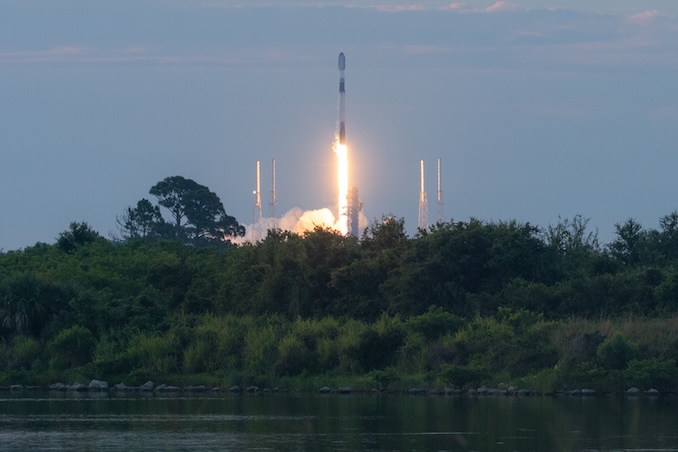
The Falcon 9 rocket lifted off from Space Launch Complex 40 at 6:53 a.m. EDT (1053 UTC).
The 45th Weather Squadron has predicted 95 percent probability of favorable weather on Tuesday. Meteorologists said there was little chance of interference from cumulus clouds.
SpaceX launched the mission using Falcon 9 first stage booster B1078. This was its 29th flight, following previous launch missions that included NASA’s Crew-6, USSF-124, and SES’s O3b mPOWER-B.
About nine minutes after takeoff, B1078 landed on ‘A Shortfall of Gravitas’, a drone ship deployed in the Atlantic Ocean. This was the 157th landing so far on this ship and the 628th booster landing of SpaceX.
New technologies, new secrets
The introduction of Starfall into SpaceX’s lineup of spacecraft continues the naming pattern of objects the company launches into orbit, i.e. Starlink, Starshield, and eventually Starship. But like Starshield, SpaceX hasn’t said much about this new reentry capability.
The final EA, published in May, said SpaceX wanted to launch Starfall either into low Earth orbit or to a sub-orbital trajectory. The capsule could be launched on a Falcon 9 rocket or Starship-Super Heavy flight.
As part of its initial public offering roadshow presentation, SpaceX included a graphic that shows a type of satellite bus with slots for up to four Starfall capsules. It includes the label, “In-Orbit Manufacturing.”
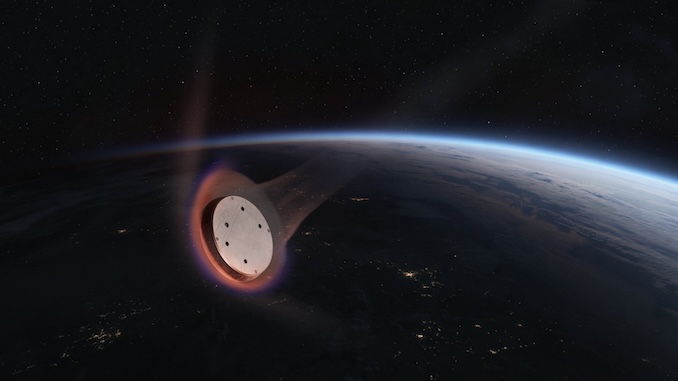
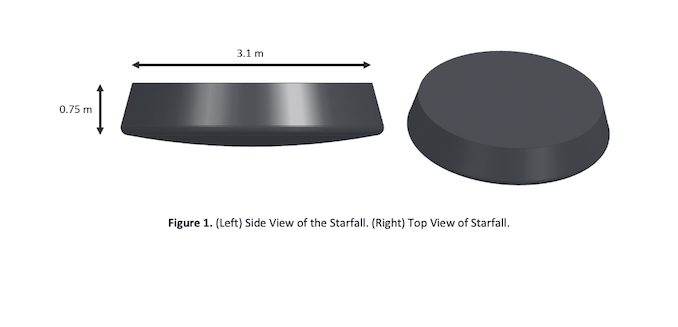
The FAA-published EA stated that each Starfall capsule “is a cylindrical-shaped capsule that is approximately 0.75 m (2.5 ft) long, has a diameter of 3.1 m (10.2 ft), weighs approximately 2,100 kg (4,600 lb), and is capable of carrying a 1,000 kg (2,200 lb) payload with a gross weight of 3,100 kg.” (6,800 pounds).”
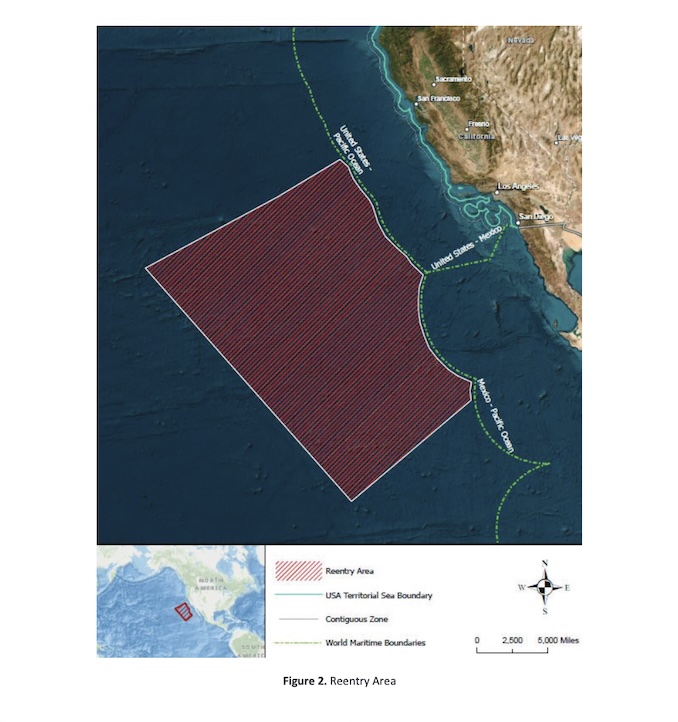
It said these capsules would be recovered in the Pacific Ocean, similar to the Dragon spacecraft.
SpaceX has not indicated how long the Starfall capsule will remain in orbit or whether it is hosting any customer payloads onboard. As outlined in the EA document, there are some notable ambitions for the technology.
“The proposed action is intended to (1) enable point-to-point delivery of critical cargo through space on rapid timelines and (2) create a self-sustaining commercial in-space manufacturing market by offering access to microgravity and vacuum, deorbiting, and safe return from orbit,” the document said. “This is in line with national objectives to expand commercial activity in LEO.
“For example, Starfall could serve as an expanded successor to the International Space Station (ISS), taking successful ISS manufacturing experiments and scaling them up to a self-sustaining manufacturing economy in space. The proposed action is needed to advance innovative space capabilities by maturing commercial technology.”
The document states that while the Starfall capsules do not have a main propulsion system, they do have an attitude control system that uses inert gas to correctly orient the spacecraft. This means that the spacecraft can only change its attitude, but cannot perform a de-orbit burn.
Starfall capsules are composed of two primary pieces, a top plate and a heat shield, which separate after reentry. FAA documents describe the top plate as “the aluminum structure is partially wrapped in thermal protection material and weighs approximately 1,400 kilograms (kg).”
“The heat shield consists of a carbon fiber structure wrapped in thermal protective material and consists of two large, composite overwrapped pressure vessels (COPVs) filled with compressed nitrogen gas (151 liters each) and several smaller auxiliary compressed gas bottles (9 liters each). The total weight of the heat shield is approximately 700 kg.”
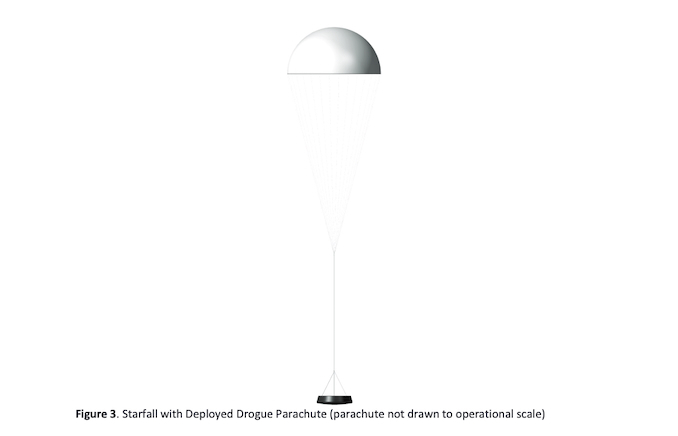
After re-entry, the top plate separates to reveal the parachute, which is attached to “four reinforced attachment points on the vehicle”. There are three parachutes in total, a drogue, a pilot and the main landing parachute.